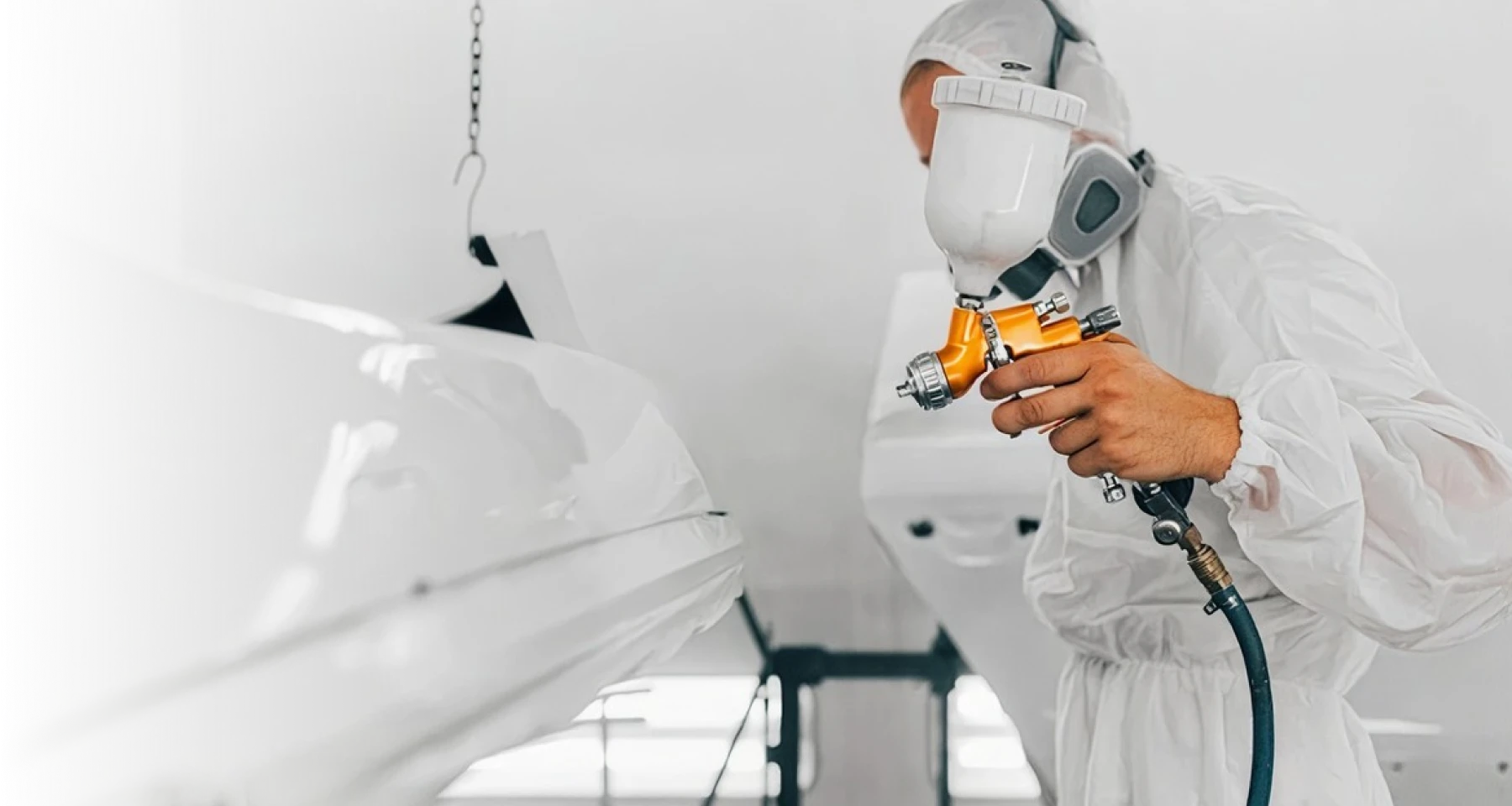
Gloris Finishing Glaze 10C silicone-free finishing glaze, removes swirl marks & holograms for mirror-high gloss automotive paint final polishing.
Automotive Finishing Glaze 10C
Product Overview
Product Application
For auto paint sanding, repair and polishing. It eliminates swirl marks and holograms from coarse & medium waxes to restore mirror-high gloss paint finish.
Minimum Order Quantity
6 Cans
 Wholesale or Distribution
 Technical details
Product Type
Mirror Glaze Wax 10C
Application
Auto Paint Sanding, Repair & Polishing
Surface Type
Automotive Paint
Appearance
Wax Emulsion
Density (g/mL)
0.95-1.20
pH Value
7--9
Weight
1000 g / Can
Package
12 Cans / Pack
Product Features
Precision Finishing Polish – Mirror-Like Results
Unlike standard polishing products that only enhance surface gloss, this finishing polish is formulated with refined abrasives to quickly remove minimal swirl marks or holograms without leaving haze on automotive paint. It delivers a clear, deep, and mirror-like finish with enhanced gloss.
Effective Removal of Fine Sanding Marks
Designed to eliminate sanding scratches from 1000-grit and finer abrasives, this product refines the paint surface to a smooth, uniform appearance, making it ideal as a final step among fine polishing compounds and finishing glazes.
Safe, Silicone- and Wax-Free Formula
Formulated without silicone oils or waxes, ensuring clean paint surfaces and full compatibility with subsequent processes such as coating, sealing, or wax application.
Durable Shine with Oleo- & Hydro-Phobic Properties
During polishing, a protective layer forms on the surface, providing excellent oleo- & hydro-phobic properties. This enhances gloss, maintains a long-lasting shine, and extends the durability of the treated paintwork.
Easy to Apply – Flexible for Hand or Machine Use
Can be applied manually or with a polishing machine, offering smooth operation, precise control, and adaptability to different working environments.
Revitalized Surface – Smooth and Glossy Finish
After polishing, the paint feels silky smooth with a natural, full-bodied shine. The result is a refreshed, showroom-quality appearance, perfect for professional detailing or at-home care with car wax.
For Wholesalers & Distributors
Gloris supplies complete automotive refinishing solutions to wholesalers and distributors worldwide. Our product range covers abrasive sanding discs, body filler, clear coats, window films and PPF. We deliver consistent, high-quality products with reliable supply to help partners grow their automotive repair business.
Technical Resources
Related Insights


FAQ
How should Rubbing Compound 10A and Mirror Glaze 10C be paired for a more efficient polishing process?
If the paint surface shows oxidation, light scratches, swirl marks, or needs faster initial correction, start with the rubbing compound and then refine with the mirror glaze based on the surface condition.
You may also want to compare this with What abrasive grit sequence is more reliable for automotive refinishing? and Why can film sanding discs still leave deep scratches or random swirl marks?.
A common pairing approach is:
-
Step 1: Use Rubbing Compound 10A to treat obvious oxidation, light scratches, and surface defects.
-
Step 2: Follow with Mirror Glaze 10C to improve clarity, reduce fine marks and holograms, and move the finish closer to a mirror effect.
When Mirror Glaze alone is enough:
If the paint is already in fairly good condition and only needs more gloss, refinement of very light marks, or a final finishing step, Mirror Glaze can be used directly.
Application reminder:
Use polishing pads in good condition for each step, and control both temperature and pressure to avoid creating fresh marks or haze through overheating.
Related product links
Further reading
How to Use Rubbing Compound Correctly on Automotive Paint
In the automotive detailing, body shop repair, and used car reconditioning industry, rubbing compound (also known as cutting compound) is widely used to remove oxidation, fine scratches, swirl marks, water spots, and old wax residues while restoring paint gloss and smoothness. Using a rubbing compound correctly not only improves polishing efficiency, but also helps prevent holograms, burn marks, and uneven finishing results.

When Should You Use a Rubbing Compound?
A fast cutting compound is commonly used when the paint surface has:
- Oxidation and dullness
- Fine scratches
- Swirl marks and wash marks
- Reduced gloss
- Heavy wax residue
- Light paint defects
- Used car paint aging
The main purpose of coarse polishing compound is fast defect removal and paint correction during the first polishing stage.
Correct Application Steps for Rubbing Compound
1. Clean the Paint Surface First
Before polishing, thoroughly remove dust, grease, and iron contaminants from the paint surface. An unclean surface may create additional scratches during polishing and affect the final finish quality.
2. Choose the Right Polishing Pad
Different polishing pads provide different cutting performance:
- Wool Pad: Strong cutting ability for heavy oxidation
- Coarse Foam Pad: Suitable for standard cutting applications
- Fine Foam Pad: Suitable for finishing and gloss enhancement
For metallic paint and clear coat finishes, foam pads are generally recommended for better control and reduced swirl marks.
3. Control the Amount of Compound
Using too much polishing compound does not improve performance. Excessive product may cause:
- More polishing dust
- Sticky residue
- Excessive heat
- Uneven gloss
It is recommended to use small amounts gradually and work on sections around 40cm × 40cm.
4. Use Proper Machine Speed
When using a rotary polisher:
- Spreading speed: 600–800 RPM
- Working speed: 1200–1800 RPM
Proper speed control helps balance cutting efficiency and paint safety.
5. Use a Cross-Hatch Polishing Method
Professional detailing shops usually use a cross-hatch polishing pattern: Horizontal + vertical polishing passes. This method improves polishing consistency, reduces missed areas, and enhances paint smoothness and gloss.
6. Avoid Staying in One Spot Too Long
Rubbing compounds have strong cutting power. Keeping the polishing machine in one area for too long may cause:
- Overheating
- Clear coat damage
- Burn marks
- Uneven finishing
Extra care should be taken around edges and body lines.
Conclusion
Using a rubbing compound correctly is an important step in automotive paint correction and polishing. By selecting the proper polishing pad, machine speed, and polishing technique, you can efficiently remove paint defects while improving gloss and finishing quality.
For automotive detailing shops, body repair centers, and used car reconditioning businesses, a high-performance rubbing compound can significantly improve workflow efficiency and customer satisfaction.
How to Choose the Right Polishing Compound for Automotive Paint
Introduction
Polishing compounds play a critical role in automotive paint correction, detailing, and refinishing. Whether removing oxidation, eliminating sanding marks, or enhancing gloss after paint repair, selecting the right polishing compound directly impacts efficiency, finish quality, and overall labor costs.
With numerous polishing products available on the market, understanding their characteristics and applications can help body shops, detailing centers, and distributors make better purchasing decisions.
1. Types of Automotive Polishing Compounds
1.1 Heavy Cutting Compound
Heavy cutting compounds are designed for aggressive defect removal and feature strong cutting performance.
Typical applications include:
- Removing P1200–P2000 sanding scratches
- Eliminating oxidation
- Correcting deep scratches
- Removing swirl marks and wash marks
- Used car reconditioning and paint restoration
Heavy cutting compounds are commonly used as the first polishing stage in automotive paint correction.
For example, 鹦鹉®Gloris Rubbing Compound 10A delivers fast defect removal while maintaining good surface clarity, making it suitable for professional body shops and refinishing applications.

1.2 Medium Cutting Compound
Medium cutting compounds provide a balance between cutting performance and finishing capability.
They are typically used for:
- Light scratch removal
- Paint refinement
- Eliminating fine sanding marks
- Reducing holograms
Medium compounds are generally used as an intermediate polishing step following heavy cutting.
1.3 Finishing Polish
Finishing polishes are formulated to maximize gloss and paint clarity. They contain ultra-fine abrasives that effectively remove micro-marring and polishing haze.
Typical applications include:
- Final paint enhancement
- Gloss improvement
- Hologram removal
- Dark paint finishing
- New car detailing
For example, 鹦鹉®Gloris Mirror Glaze Wax 10C helps enhance gloss depth and paint smoothness, producing a clearer and more reflective finish.
2. How to Choose the Right Polishing Compound
2.1 Choose Based on Paint Defects
Different paint conditions require different levels of cutting performance.
For heavily oxidized surfaces, severe scratches, or sanding marks, a heavy cutting compound is recommended.
For moderate defects and light imperfections, a medium cutting compound is usually sufficient.
For well-maintained paint surfaces that only require gloss enhancement, a finishing polish is the ideal choice.
2.2 Consider the Refinishing Process
Professional paint correction typically follows a multi-step polishing process:
Heavy Cutting → Refining → Finishing
For example:
- Step 1: Rubbing Compound 10A
- Step 2: Medium Cutting Compound (if necessary)
- Step 3: Mirror Glaze Wax 10C
This process delivers a smoother surface and a higher gloss finish.
2.3 Consider Working Efficiency
Body shops and detailing centers often prioritize productivity.
An ideal polishing compound should provide:
- Fast defect removal
- Low dust generation
- Easy wipe-off
- Reduced polishing time
- Consistent finishing quality
Stable polishing performance helps reduce labor costs while improving workshop throughput.
2.4 Consider Paint Type
Modern automotive coatings include:
- Solid colors
- Metallic paints
- Pearl finishes
- High-solid clear coats
Different paint systems may respond differently to polishing compounds.
Testing products on representative panels before large-scale application is always recommended.
Conclusion
Choosing the right polishing compound is not simply about achieving a glossy finish. It is about balancing cutting performance, polishing efficiency, paint safety, and final appearance.
Heavy cutting compounds are ideal for rapid defect removal, while finishing polishes maximize gloss and visual clarity.
For body shops, detailing businesses, and automotive refinish distributors, building a complete polishing system helps deliver more consistent results, higher productivity, and improved customer satisfaction.Contact us for professional products and tailored solutions.