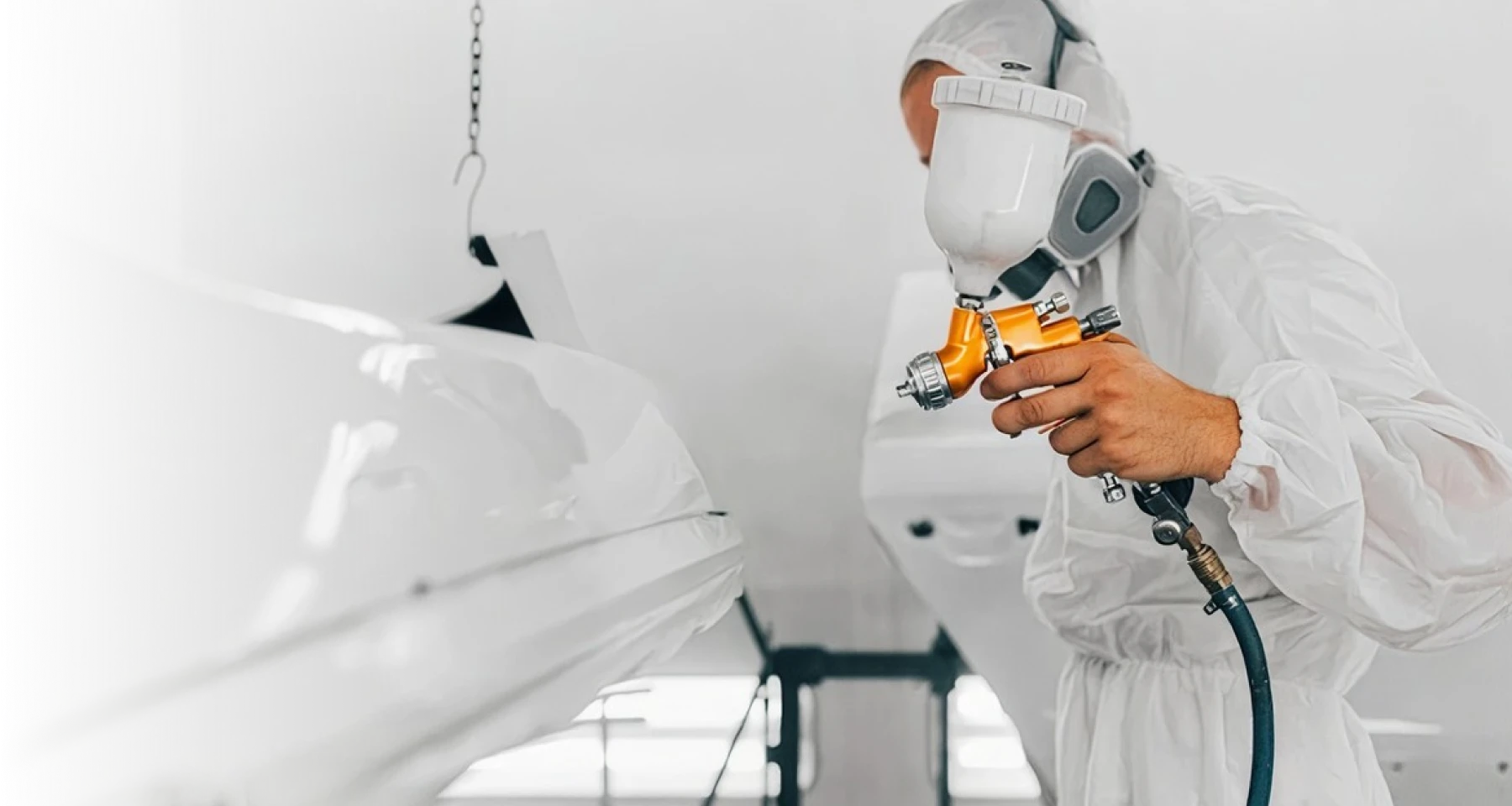
Gloris 2K automotive body filler provides strong adhesion, no shrinkage, easy sanding and clog-resistant performance for dents, scratches, rust and body repair.
Automotive 2K Putty Base
Product Overview
Product Application
Compounding, Buffing & Polishing. Repairing vehicle dents, dings, holes, large rusted areas, and scratches. Suitable for various metal substrates and selected plastic surfaces.
Minimum Order Quantity
3 cans
 Wholesale or Distribution
 Technical details
Product Type
2K Putty Base
Application
Compounding, Buffing & Polishing
Substrates
Metal and Plastic Surfaces
Mixing Ratio
1.5-3g/per 100g
Curing Time Range
3-15 mins
Sanding Time Range
30 mins-4 hours
Pull-Off Strength
4.55 Mpa
Erichsen Cupping Value
0.75 mm
Weight
3.5kg / Can
Package
3 cans / carton
Product Features
Smooth Application, Easy Sanding
Lightweight filler with a fine texture, compatible with most paint systems. Easy to apply and sand, providing a pinhole-free finish across various grit ranges.
Superior Adhesion, No Shrinkage
This Auto Body Filler bonds securely to substrates with zero shrinkage. Prevents peeling or delamination, ensuring stability during sanding, painting, and long-term vehicle use.
Fast Cure, Flexible Sanding Window
Shape in 3 - 5 mins and sand in 30 mins to slash labor time; maintains a soft, sandable texture even if delayed for 2–4 hours.
Maximum Durability – Crack & Warp Resistant
Built for longevity, this filler delivers consistent repair results with exceptional resistance to cracking and warping over time.
Clog-Resistant, Cost-Effective
Engineered to resist sandpaper loading (clogging), extending the life of your abrasives and reducing overall material costs.
For Wholesalers & Distributors
Gloris supplies complete automotive refinishing solutions to wholesalers and distributors worldwide. Our product range covers abrasive sanding discs, body filler, clear coats, window films and PPF. We deliver consistent, high-quality products with reliable supply to help partners grow their automotive repair business.
Technical Resources
Related Insights


FAQ
When can 2K putty be sanded, and when is it safer to move to the next step?
The sanding window of 2K alloy putty is usually affected by spread thickness, ambient temperature, hardener ratio, and working area size.
You may also want to compare this with How to Choose the Right Automotive Body Filler: A B2B Buying Guide and What abrasive grit sequence is more reliable for automotive refinishing?.
Based on the current product guidance, a practical reference is:
-
At normal temperature, it usually begins to set within a few minutes.
-
It can usually enter the sanding stage in about 30 minutes.
-
If the layer is thick, the temperature is low, or ventilation is weak, extend the waiting time accordingly.
A safer way to judge readiness:
When the putty surface is no longer tacky, does not keep a clear fingerprint under light pressure, and sands into even powder instead of sticky clumps, it is usually in a suitable sanding window.
Before moving to the next step:
Make sure the contour has been leveled smoothly, edge transitions look natural, and all sanding dust is removed before primer or later coating steps.
Related product links
How should film abrasives, mesh abrasives, and sponge abrasives be combined for flat panels, curves, and edges?
In real refinishing or fine sanding work, film abrasives, mesh abrasives, and sponge abrasives each have their own strengths. The key is not which one is "best," but whether each one is used at the right stage of the process.
You may also want to compare this with What abrasive backing materials are commonly used in automotive sanding, and how should you choose among them? and In automotive refinishing, how should you choose between dry sanding and wet sanding?.
A practical way to think about them:
-
Film abrasives are well suited to flatter areas where stable cutting, consistent scratch patterns, and wet-or-dry use matter.
-
Mesh abrasives work well in dusty conditions, especially when dust extraction is used and anti-loading performance is important.
-
Sponge abrasives are more suitable for curves, edges, blend areas, and detail finishing because they reduce local pressure marks and missed spots.
A useful combination strategy:
-
For broad leveling work and primary stock removal, start with film abrasives or mesh abrasives.
-
For curved transitions, edge refinement, and final detail work, switch to sponge abrasives.
-
If the job creates a lot of dust and loading, mesh abrasives with extraction are often more efficient.
-
If the goal is a cleaner scratch pattern and more predictable paint or polishing follow-up, film abrasives are often easier to control.
In practice, do not choose only by abrasive name. Also consider surface shape, dust removal, current grit step, and what the next process needs.
Related product links
How to Choose the Right Automotive Body Filler: A B2B Buying Guide
1. Understanding Main Types of Automotive Body Fillers
There are several common types of body fillers available in the global market:
You may also want to compare this with When can 2K putty be sanded, and when is it safer to move to the next step? and What abrasive grit sequence is more reliable for automotive refinishing?.
1.1 Polyester Body Filler
This is the most widely used general-purpose filler suitable for most repair jobs.
Features:
- Good filling capability
- Easy sanding
- Cost-effective performance
Applications:
- Large-area repairs
- Daily bodywork
- Aftermarket services
1.2 Lightweight Body Filler
Designed with lower density for easier application and sanding.
Features:
- Easier sanding
- Reduced sandpaper consumption
- Smoother surface finish
Applications:
- High-end repairs
- Fine finishing before painting
1.3 Fiberglass Reinforced Filler
Contains fiberglass strands to enhance structural strength.
Features:
- High strength
- Excellent structural repair capability
- Strong crack resistance
Applications:
- Severe damage repair
- Hole filling
- Structural reinforcement
1.4 All-Metal Body Filler
Contains metallic particles for improved adhesion and durability.
Features:
- Strong adhesion
- Excellent compatibility with metal substrates
- Low shrinkage
Applications:
- Metal surface repairs
- Heavy-duty industrial applications
2. Choosing Based on Substrate Compatibility
Different substrates require different filler properties. Incorrect selection can lead to cracking or adhesion failure.
2.1 Metal Surfaces
Recommended:
- Polyester filler
- All-metal filler
Key Requirement:
- Strong adhesion and durability
2.2 Plastic Parts
Recommended:
- Semi-flexible filler
Key Requirement:
- Flexibility to prevent cracking
Note: Not all fillers are suitable for plastic surfaces such as bumpers.
2.3 Composite Surfaces
Recommended:
- Multi-purpose filler
Key Requirement:
- Good compatibility across materials
3. Key Technical Parameters to Evaluate
For B2B buyers, technical performance is more important than price alone.
3.1 Curing Time
- Typically ranges from 3 to 15 minutes
- Affects workflow efficiency and repair speed
3.2 Sanding Performance
- Ease of sanding
- Sandpaper consumption
High-quality fillers reduce labor and material costs.
3.3 Adhesion Strength
- Determines long-term durability
- Prevents peeling or detachment
3.4 Crack Resistance
- A critical indicator of product reliability
- Ensures long-term performance stability
3.5 Delayed Sanding Stability
- Remains easy to sand after 2–4 hours
- Does not become overly hard
Important for busy workshop environments.
4. Selection Based on Application Scenarios
4.1 Body Shops
Key Needs:
- Easy application
- Fast sanding
- Stable performance
Recommended:
- High-performance universal fillers
4.2 Distributors and Wholesalers
Key Needs:
- Versatility
- Broad application range
- Stable supply
4.3 Private Label Buyers
Key Needs:
- Product consistency
- Customizable packaging
- Technical support
4.4 Industrial and OEM Applications
Key Needs:
- High performance
- Batch consistency
- Quality certification
5. Common Mistakes in Choosing Body Fillers
❌ Mistake 1: Focusing Only on Price
Low-cost fillers often lead to:
- Poor sanding performance
- Cracking issues
- Higher labor costs
❌ Mistake 2: Ignoring Substrate Compatibility
Can result in:
- Weak adhesion
- Repair failure
❌ Mistake 3: Overlooking Work Efficiency
- Slow curing products
- Reduced productivity
- Increased downtime
6. Advantages of High-Performance 2K Body Filler
A high-quality 2K body filler offers several advantages:
- Suitable for both metal and some plastic surfaces
- Fast curing within 3–15 minutes
- Ready for sanding in about 30 minutes
- Maintains sanding performance even after 2–4 hours delay
- Easy sanding with reduced sandpaper consumption
- Strong adhesion with excellent crack resistance
- Stable and durable performance over time
Best For:
- High-efficiency repair shops
- Bulk buyers
- International distribution channels
Conclusion
Choosing the right automotive body filler is not just about material selection — it is a strategic decision that impacts efficiency, cost, and final quality.
For B2B buyers, an ideal body filler should offer:
- Wide substrate compatibility
- Stable and consistent performance
- Excellent sanding characteristics
- Fast and efficient curing
In a highly competitive global automotive aftermarket, selecting the right product and reliable supplier will directly influence your business success and customer satisfaction.