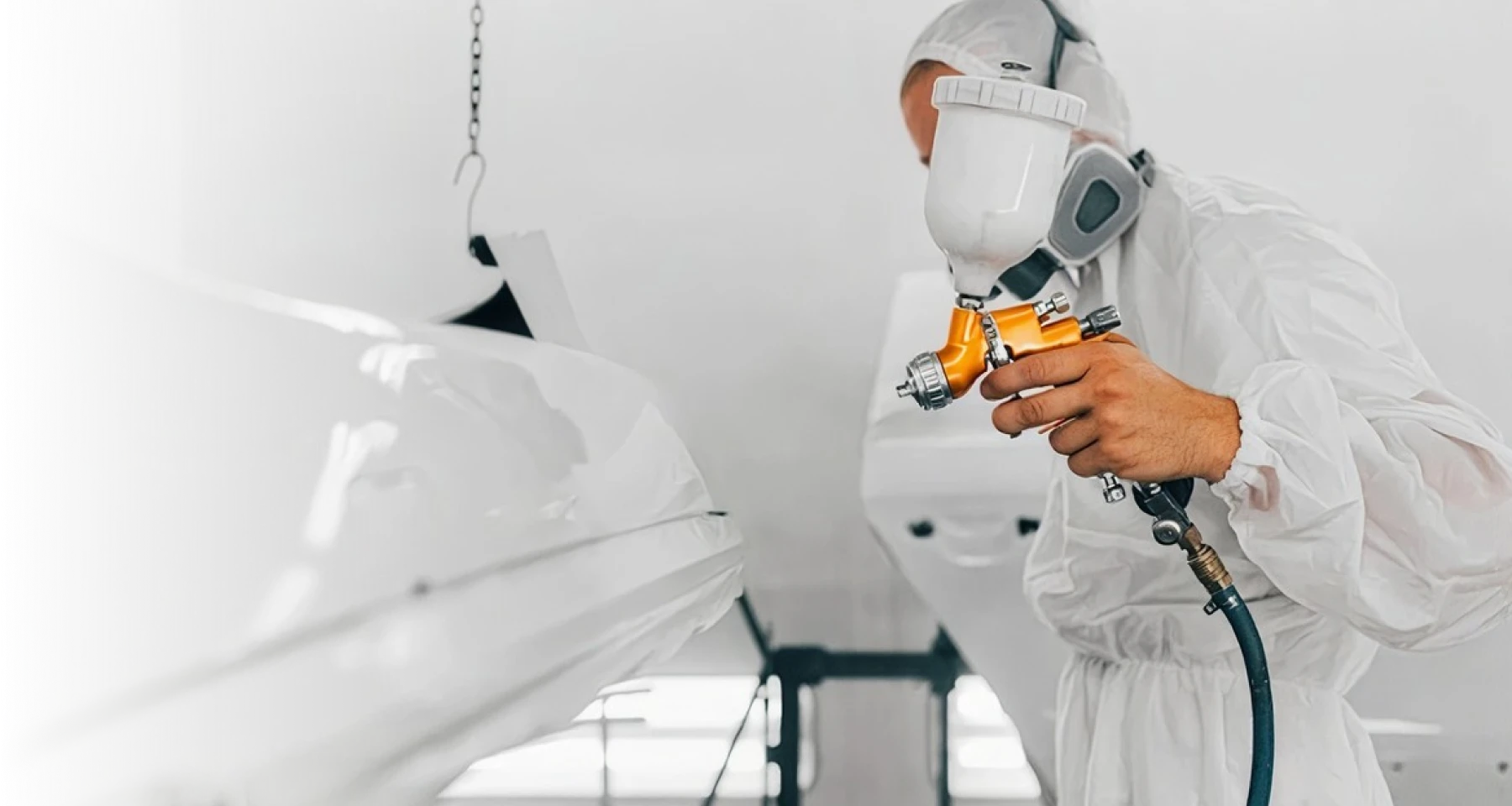
Gloris offers fine wet dry sandpaper for P2000 high-grit sanding, paint surface preparation and fine finishing in automotive refinishing.
Fine Water Sand Sheets A430

Product Overview
Product Application
Mainly used for sanding and polishing of automotive parts, boat hulls, machine tools, alloy products, metals, panels, high-end furniture, wood products, jewelry, crafts, jade, painted surfaces, and plastic housings.
Grit Options
- P1500
- P2000
Minimum Order Quantity
100 pcs
 Wholesale or Distribution
 Technical details
Product Type
Fine Water Sand Paper A430
Abrasive
Aluminum Oxide
Backing
Fiber Paper Backing
Grain Coating
Electrostatic + Open Coat
Top Coating
Anti-Clogging Layer
size
138mm*230m
Package
50 Sheets / Box
Industry pain points
| Challenge | Impact |
|---|---|
| Low Cutting Efficiency | Longer sanding time and increased labor costs |
| Frequent Disc Replacement | Tearing, wrinkling, and reduced productivity |
| Body Filler Dust Loading | Reduced cutting performance and lower continuous sanding efficiency |
| Dust Accumulation on Surface | Standard hole patterns can leave dust build-up, affecting surface finish |

Product Features
Wet & Dry Sanding Sheets Suitable for both dry and wet sanding applications, effectively reducing dust and clogging.
Waterproof & Tear-Resistant Technology Enhances structural strength for improved durability and extended service life.
Electrostatic Coating Ensures uniform grain distribution for faster cutting and consistent sanding performance.
Thickened Fiber Paper Backing Made with thickened fiber paper backing for enhanced flexibility and durability.
For Wholesalers & Distributors
Gloris supplies complete automotive refinishing solutions to wholesalers and distributors worldwide. Our product range covers abrasive sanding discs, body filler, clear coats, window films and PPF. We deliver consistent, high-quality products with reliable supply to help partners grow their automotive repair business.
Technical Resources
Related Insights


FAQ
What abrasive backing materials are commonly used in automotive sanding, and how should you choose among them?
What are the common abrasive backing materials?
You may also want to compare this with How should film abrasives, mesh abrasives, and sponge abrasives be combined for flat panels, curves, and edges? and What abrasive grit sequence is more reliable for automotive refinishing?.
The most common backing materials are listed below:
Paper Backing
-
Cost-effective and widely used
-
Suitable for routine dry sanding and lighter-duty applications
-
Stability may drop under heat, humidity, and long continuous use
Cloth Backing
-
Better flexibility and tear resistance
-
Often used for heavier cutting or jobs requiring bending
-
Usually higher cost than paper backing
Film Backing
-
More uniform thickness and higher dimensional stability
-
Less edge curl and deformation in continuous sanding
-
Common in automotive fine sanding and pre-paint finishing
Sponge Backing
-
Better conformity on curves
-
Useful for edges, contours, and manual detail work
Mesh Backing
-
Strong anti-clogging performance with dust extraction
-
Suitable for dusty and clog-prone conditions
Related product links
Further reading
In automotive refinishing, how should you choose between dry sanding and wet sanding?
Both dry sanding and wet sanding are common. The key is not which one sounds more advanced, but which one suits the current step better.
You may also want to compare this with What abrasive grit sequence is more reliable for automotive refinishing? and Why do abrasives clog, run hot, or shed grit, and how can you reduce these problems?.
In general:
-
Dry sanding is better for fast shaping, higher efficiency, and continuous work with a dust extraction system.
-
Wet sanding is better for fine surface refinement, controlling local heat buildup, and reducing airborne fine dust.
When to prioritize dry sanding:
Dry sanding is usually more efficient for body filler shaping, sanding surfacer or primer, and any step where material must be removed quickly.
When to prioritize wet sanding:
Wet sanding is usually better for pre-topcoat refinement, pre-polish correction, and jobs where scratch consistency matters more.
Practical note:
Before wet sanding, confirm that the abrasive and backing support wet use. During dry sanding, poor dust extraction will make clogging, heat, and dust problems more obvious.
Related product links
What abrasive grit sequence is more reliable for automotive refinishing?
There is no single fixed sanding sequence for every repair job, but a safe rule is to move from coarse to fine in gradual steps.
You may also want to compare this with In automotive refinishing, how should you choose between dry sanding and wet sanding? and Why do abrasives clog, run hot, or shed grit, and how can you reduce these problems?.
A common workflow is:
-
P80-P120: for initial body filler shaping, correcting obvious defects, or removing old coatings quickly.
-
P150-P240: for intermediate sanding to remove deeper scratches left by the previous step.
-
P320-P500: for surface preparation before primer or surfacer.
-
P800-P1500: for fine sanding before topcoat, blending areas, or higher-finish refinement.
-
Above P1500: better suited to fine wet sanding, pre-polish preparation, or correcting minor defects on high-gloss surfaces.
Practical tip:
Avoid jumping directly from a very coarse grit to a very fine grit. Deep scratches from the previous step can remain and cause rework. A step-by-step progression is usually more stable.